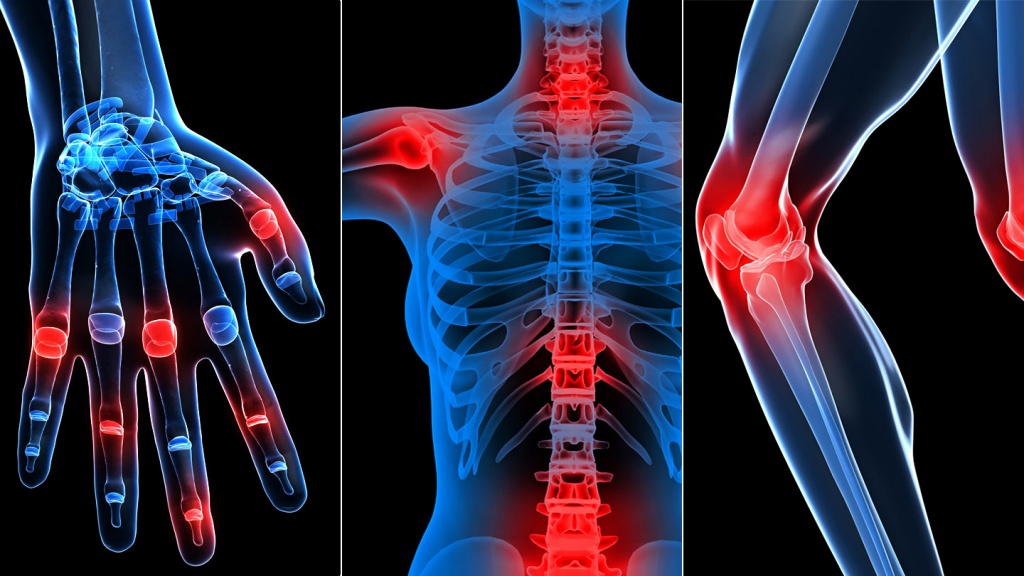
At last, joint and bone pain will go away FOREVER!!!
You should know that calcium is necessary not only for bones, cartilage, joints, nails, and hair. It is needed by the entire body and by every organ individually—the heart, brain, liver, and so on.
Although calcium is best known for its role in building bone tissue, it
also participates in:
• Transmission of nerve impulses: Calcium is needed to transmit signals
between nerve cells, which is important for muscle contractions, including the
heartbeat.
• Blood clotting: Calcium plays a key role in the blood clotting
process, helping form clots and prevent bleeding.
• Muscle contraction: As already mentioned, calcium is necessary for the
contraction of all types of muscles, including the heart muscle.
• Hormone regulation: Calcium is involved in the secretion of certain
hormones, such as insulin.
• Maintaining healthy blood pressure: Calcium helps regulate blood
pressure.
You should also know that when we eat food containing calcium, the calcium then enters the bloodstream, and at that point the hormone calcitonin begins to work. It is produced by the thyroid gland. It is supposed to incorporate calcium into the bones and all the organs; otherwise calcium will not move from the blood into those organs and bones.
How calcitonin works: a simple explanation
Calcitonin is a hormone that plays an important role in regulating the level of calcium in the blood and maintaining bone health. Think of it as a kind of “calcium manager” in the body. To repeat—it is produced by the thyroid gland.
The main functions of calcitonin:
• Slows bone breakdown: Calcitonin acts on special cells called
osteoclasts, which break down bone tissue. It suppresses their activity,
thereby reducing the rate of bone destruction.
• Stimulates the formation of new bone tissue: At the same time,
calcitonin activates osteoblasts—cells responsible for building new bone
tissue.
• Lowers the level of calcium in the blood: When the calcium level in
the blood rises, calcitonin helps lower it by promoting the deposition of calcium
in the bones.
Why is this necessary?
• Strong bones: Proper calcitonin function helps keep bones strong and
healthy, preventing osteoporosis and other bone diseases.
• Stable calcium levels: Calcium is necessary for many body functions,
such as transmitting nerve impulses and muscle contraction. Calcitonin helps
keep blood calcium within the optimal range.
Replenishing bones, joints, and other organs with calcium is a constant and continuous process.
If the thyroid gland becomes ill or damaged, calcitonin production is disrupted, and this leads to a halt in the incorporation of calcium into the bones and all other organs. This causes thin nails, hair loss, and constant pain in the joints and bones that later never goes away unless the thyroid gland is restored.
In other words, blood tests may show a completely sufficient amount of calcium in the blood, but that does not mean this calcium is being incorporated into the organs and bones if calcitonin is not functioning due to thyroid failure.
But that is only half the problem! Imagine the thyroid gland becomes ill, calcitonin is no longer produced normally, and calcium stops being incorporated into the bones and organs. The body begins sending a signal to the brain: “I don’t have enough calcium!!!” At that moment, the parathyroid gland begins to work. Let us explain the parathyroid gland.
Parathyroid glands are small organs located behind the thyroid gland. They play an important role in maintaining the level of calcium in the blood.
What does the parathyroid gland do?
• Regulates calcium levels: It produces parathyroid hormone, which
controls the amount of calcium in the blood. When calcium levels fall, the
parathyroid gland releases more parathyroid hormone to increase them.
• Affects bones: Parathyroid hormone helps release calcium from the
bones in order to raise its level in the blood.
• Affects the kidneys: Parathyroid hormone also acts on the kidneys,
increasing calcium reabsorption and decreasing phosphate reabsorption.
Why is this important?
• Healthy bones: Proper calcium levels are necessary for
maintaining bone health.
• Normal muscle and nerve function: Calcium plays an important role in
muscle contraction and transmission of nerve impulses.
Problems with the parathyroid glands:
• Hyperparathyroidism: This is a condition in which the
parathyroid glands produce too much parathyroid hormone, which can lead to
weakened bones and kidney stones. Hyperparathyroidism is eliminated by our
nano-iodine.
• Hypoparathyroidism: This is a condition in which the parathyroid
glands do not produce enough parathyroid hormone, which can lead to cramps and
numbness. Hypoparathyroidism is corrected by our nano-iodine.
Why is parathyroid hormone needed?
The main task of parathyroid hormone is to monitor the calcium level in
our body. Calcium is very important for many processes:
• Strong bones: Calcium is the main building material for bones.
Parathyroid hormone helps regulate its deposition in the bones.
• Muscle function: Calcium is necessary for muscle contraction.
Parathyroid hormone ensures there is enough calcium for this function.
• Transmission of nerve impulses: Calcium is involved in transmitting
nerve signals.
• Blood clotting: Calcium is necessary for normal blood clotting.
Let us continue.
We stopped at the point where, due to impaired calcitonin production in the thyroid gland, the bones and all organs begin to experience calcium deficiency. The brain, having received a signal about calcium deficiency, activates the parathyroid gland, which produces parathyroid hormone (you read about it above), and it begins searching for calcium deposits in the body for immediate delivery into the blood, muscles, brain, liver, kidneys, and other organs.
And where can it find it?
Of course, in the bones! Parathyroid hormones begin extracting calcium from the legs and arms, assuming that if an arm or leg hurts, nothing catastrophic will happen to the body, but leaving vital organs such as the brain, heart, kidneys, and liver without calcium would be fatal. This is where pain in the legs and joints begins, because parathyroid hormone took calcium from there and distributed it to more important organs, and this pain will never go away until the thyroid gland is healed, and along with it the parathyroid gland.
Thus we come to a whole group of diseases, such as:
Arthritis: Inflammation of the joints
(rheumatoid arthritis, osteoarthritis, etc.).
Osteoporosis: Reduced bone density, which can lead to fractures and
joint pain.
Gout: A disease associated with the deposition of uric acid salts in the
joints.
Let us briefly go through each disease.
Arthritis: simply explained
Arthritis is a general name for a group of joint diseases. When people talk about arthritis, they usually mean joint inflammation that causes pain, swelling, and limited movement.
Causes of arthritis: The very first and main cause is disruption of thyroid function!
Symptoms of arthritis
Pain: Usually gets worse with movement and decreases at rest.
Swelling: There may be puffiness around the joint.
Redness: The skin around the joint may become red and warm.
Heat: The joint may feel hot to the touch.
Restricted movement: Limited mobility in the joint.
Morning stiffness: Difficulty moving after prolonged rest.
Types of arthritis
Osteoarthritis: The most common type, associated with wear and tear of
the joints.
Rheumatoid arthritis: An autoimmune disease that mainly affects the small
joints of the hands and feet.
Psoriatic arthritis: Develops in people with psoriasis.
Gout: Associated with deposition of uric acid salts in the joints.
Juvenile arthritis: Arthritis that begins in childhood.
The next disease is gout.
Gout
Gout is a disease that occurs because of an elevated level of uric acid in the blood. When uric acid levels become too high, it forms crystals that are deposited in the joints, causing severe pain and inflammation.
Why does gout occur?
The very first cause is disruption of thyroid function!
What are the symptoms of gout?
Acute pain: Most often begins at night, usually in the big toe. The pain is
very severe, throbbing, as if the joint is on fire.
Swelling: The joint becomes red and swollen.
Heat: The skin around the joint feels hot.
Restricted movement: Movement in the affected joint becomes painful and
difficult.
Gout and thyroid dysfunction are two diseases that may seem unrelated at first glance, but they are directly connected. How, you ask? Here is the answer.
Metabolic processes:
Uric acid: Gout is caused by the deposition of uric acid crystals in the
joints. Thyroid hormones affect metabolism, including the level of uric acid in
the blood. Thyroid dysfunction may contribute to elevated uric acid levels and,
as a result, the development of gout.
Calcium metabolism: Both gout and thyroid dysfunction can affect calcium
metabolism in the body. Calcium imbalance may worsen the symptoms of both
diseases.
Another disease is osteoporosis: fragile bones.
Osteoporosis
Osteoporosis is a bone disease in which bones become fragile and brittle. Imagine a bone as a sponge: in osteoporosis, the “sponge” becomes more porous, which makes it weaker. Why bones become fragile was described above: it is because of impaired production of the hormone calcitonin in the thyroid gland. Let us also add that when calcitonin production is impaired, hair falls out and the legs become thinner.
How can you get rid of all this now?
It is necessary to restore the thyroid gland and along with it the parathyroid gland, eliminating hypothyroidism and hyperthyroidism in the thyroid! For this, the only method is to consume iodine, and we offer the best solution in the world for replenishing iodine in the body in the required amounts—our nano-iodine.
Sign up via Telegram at our Telegram phone number:
+7-777-0554400