
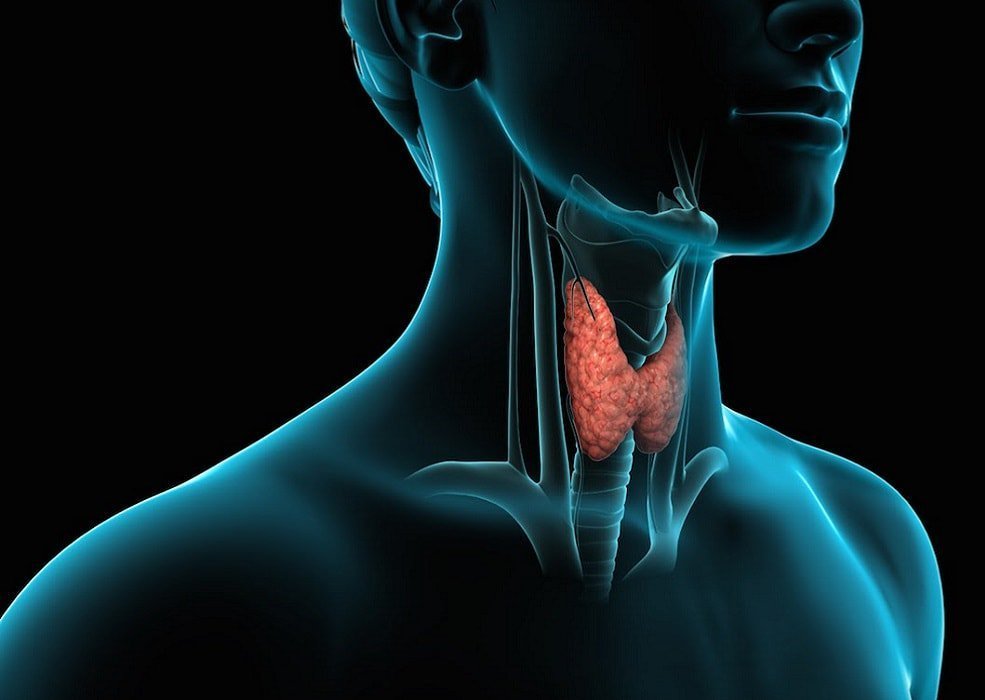
The Thyroid and Parathyroid Glands: The Invisible Conductors of Our Body
The thyroid gland: a small but very important butterfly
Imagine an orchestra where every instrument plays its own part. The thyroid gland is the conductor of that orchestra, setting the tempo and coordination for the entire symphony of our body. It is located at the front of the neck, like a butterfly wrapped around the trachea.
What does the thyroid gland do?
It produces hormones. These hormones regulate metabolism — all the chemical reactions in our body. They affect how we use energy, how fast our heart beats, and how sensitive we are to temperature. The thyroid gland produces hormones called thyroxine (T4), triiodothyronine (T3), and calcitonin. T3 and T4 act like managers or “top executives,” delivering messages to all the body’s cells, including brain cells.
Not sure what T3 and T4 are?
Here is a simple explanation.
Imagine your thyroid gland is a small factory that produces special hormones regulating many processes in your body. These hormones are called triiodothyronine (T3) and tetraiodothyronine (T4). They are like little couriers carrying important instructions throughout the body.
· T3 (triiodothyronine): the more active of the two hormones. It is like a fast and energetic courier that gets to work right away.
· T4 (tetraiodothyronine): this hormone is like a slower courier that delivers packages to a warehouse, where they are converted into T3 before reaching the final destination. This hormone is also called thyroxine.
T3 and T4 are also known as thyroid hormones.
What are T3 and T4 responsible for?
These hormones play a key role in many bodily processes:
· Metabolism: they “ignite the fire” of metabolism, regulating how quickly the body burns calories and produces energy.
· Growth and development: T3 and T4 are especially important for children’s growth and development, and for maintaining normal organ function in adults.
· Body temperature: they help regulate body temperature and keep it at an optimal level.
· Cardiovascular system: these hormones affect heart rate and blood pressure.
· Nervous system: they play an important role in the development and functioning of the brain.
Let’s talk separately about the T3 hormone
The hormone T3, or triiodothyronine, contains three iodine atoms in its molecule. That is exactly what its name reflects: triiodothyronine (“tri” means three).
How is T3 different from T4?
· Number of iodine atoms: T3 contains three iodine atoms, while T4 contains four.
· Activity: T3 is the more active form of the hormone compared to T4. It has a faster and stronger effect on metabolism.
· Conversion: T4 is converted into T3 in the body’s tissues.
Why are both hormones needed?
· Regulation of metabolism: both T3 and T4 play an important role in regulating metabolism, growth, and development.
· Interaction: T3 and T4 work together to provide fine regulation of processes throughout the body.
How do T3 and T4 work?
Thyroid hormones interact with virtually all the cells in the body. They bind to special receptors on the cell surface and transmit signals inward. These signals trigger a whole cascade of reactions that change how the cell functions.
Comparing T3 and T4 to an orchestra conductor is a very fitting metaphor.
Why is this comparison so accurate?
· Coordination of many processes: just as a conductor coordinates each musician in an orchestra, T3 and T4 regulate the work of virtually all organs and systems in the body. They influence metabolism, growth, development, body temperature, and many other functions.
· Influence on speed of processes: the speed of metabolic processes depends heavily on T3 and T4 levels. The higher their concentration, the faster metabolic processes occur. This is like a conductor setting the tempo of a musical performance.
· Interaction with other hormones and systems: T3 and T4 interact with other hormonal systems, creating a complex regulatory network. This is similar to how a conductor works with different groups of instruments in an orchestra.
So the comparison of T3 and T4 to a conductor is fully justified. They truly are crucial regulators of many processes, coordinating the body’s functions and maintaining homeostasis.
Why is iodine so important for thyroid hormones?
· Hormone structure: iodine atoms are an integral part of the structure of tetraiodothyronine, or thyroxine (T4 — meaning 4 iodine atoms), and triiodothyronine (T3 — meaning 3 iodine atoms).
· Hormone activity: iodine gives thyroid hormones their biological activity.
· Hormone synthesis: the thyroid gland uses iodine from food to synthesize T3 and T4.
Now let’s talk about the third hormone: calcitonin
You should also know that when we eat foods containing calcium, calcium enters the blood, and then the hormone calcitonin starts working. Calcitonin is produced by the thyroid gland. Its job is to incorporate calcium into the bones and all other organs; otherwise, calcium would not move from the blood into the bones and tissues.
How calcitonin works: a simple explanation
Calcitonin is a hormone that plays an important role in regulating blood calcium levels and maintaining bone health. Think of it as a kind of “calcium manager” in the body.
Main functions of calcitonin:
· Slows bone breakdown: calcitonin acts on special cells called osteoclasts, which break down bone tissue. It suppresses their activity, reducing the rate of bone loss.
· Stimulates new bone formation: at the same time, calcitonin activates osteoblasts — the cells responsible for building new bone tissue.
· Lowers blood calcium levels: when blood calcium rises, calcitonin helps reduce it by promoting the deposition of calcium into bones.
Why is calcitonin important?
· Strong bones: proper calcitonin function helps keep bones strong and healthy, preventing osteoporosis and other bone diseases.
· Stable calcium levels: calcium is essential for many body functions, such as nerve signal transmission and muscle contraction. Calcitonin helps keep blood calcium within the optimal range.
The replenishment of bones, joints, and other organs with calcium is a continuous process.
If the thyroid gland becomes diseased or damaged, calcitonin production is disrupted, and calcium incorporation into bones and organs stops. This can lead to brittle nails, hair loss, and persistent pain in the joints and bones that may never go away unless thyroid function is restored.
In other words, blood tests may show a perfectly adequate calcium level in the blood, but that does not mean calcium is actually being incorporated into bones and organs if calcitonin is not functioning properly because of thyroid dysfunction.
But that is only half the problem. Imagine the thyroid gland becomes diseased, calcitonin is no longer produced normally, and calcium stops being built into bones and organs. The body starts sending a signal to the brain: “I am lacking calcium!” At that point, the parathyroid glands begin to work.
Let’s talk about the parathyroid glands
The parathyroid glands are small organs located behind the thyroid gland. They play an important role in maintaining the level of calcium in the blood.
What do the parathyroid glands do?
· Regulate calcium levels: they produce parathyroid hormone (PTH), which controls the amount of calcium in the blood. When calcium levels drop, the parathyroid glands release more PTH to raise it.
· Affect the bones: PTH helps release calcium from bones to raise blood calcium levels.
· Affect the kidneys: PTH also acts on the kidneys, increasing calcium reabsorption and decreasing phosphate reabsorption.
Why is this important?
· Healthy bones: proper calcium levels are essential for maintaining healthy bones.
· Normal muscle and nerve function: calcium plays a key role in muscle contraction and nerve signal transmission.
Problems with the parathyroid glands
· Hyperparathyroidism: a condition in which the parathyroid glands produce too much PTH, which can lead to weak bones and kidney stones. Our Nano Iodine eliminates hyperparathyroidism.
· Hypoparathyroidism: a condition in which the parathyroid glands do not produce enough PTH, which can lead to cramps and numbness. Our Nano Iodine eliminates hypoparathyroidism.
Why is parathyroid hormone needed?
The main task of parathyroid hormone is to monitor calcium levels in the body. Calcium is vital for many processes:
· Strong bones: calcium is the main building material for bones. PTH helps regulate its deposition in bones.
· Muscle function: calcium is needed for muscle contraction. PTH helps ensure enough calcium is available.
· Transmission of nerve impulses: calcium is involved in transmitting nerve signals.
· Blood clotting: calcium is necessary for normal blood clotting.
To sum up
The parathyroid glands: small but powerful
Near the thyroid gland there are four tiny glands — the parathyroid glands. Like assistants to the conductor, they monitor one very important instrument in our orchestra: calcium.
What do the parathyroid glands do?
· Regulate calcium levels in the blood: calcium is needed for strong bones and for the normal functioning of muscles and the nervous system.
· Affect phosphorus: the parathyroid glands also regulate phosphorus levels, which are closely linked to calcium.
When the parathyroid glands do not work properly
· Hyperparathyroidism: too much hormone. Symptoms: weakness, bone pain, kidney stones.
· Hypoparathyroidism: too little hormone. Symptoms: cramps, numbness, and tingling in the limbs.
When the thyroid gland does not work properly
· Hypothyroidism: too few hormones. Symptoms: fatigue, weight gain, dry skin, constipation.
· Hyperthyroidism: too many hormones. Symptoms: nervousness, weight loss, rapid heartbeat, sweating.
Let’s examine hypothyroidism
Hypothyroidism is a condition in which the thyroid gland produces too few hormones. Imagine that the thyroid gland is a stove heating the body. In hypothyroidism, this stove runs “at low speed,” and the body becomes too cold.
Why does hypothyroidism occur?
· Severe iodine deficiency: a lack of iodine in the body can disrupt thyroid function.
· Autoimmune diseases: hypothyroidism is most often associated with the immune system mistakenly attacking the thyroid gland.
· Surgical removal of the thyroid gland: hypothyroidism may develop after thyroid surgery.
· Medications: some medications can negatively affect thyroid function.
What are the symptoms of hypothyroidism?
· Fatigue: constant tiredness and weakness.
· Slowing of processes: slower pulse, lower body temperature, slower digestion.
· Weight gain: weight may increase despite reduced appetite.
· Swelling: swelling may appear in the face, hands, and feet.
· Dry skin and hair: the skin becomes dry and flaky, and hair falls out.
· Constipation: bowel function is impaired.
· Feeling cold: a person may feel cold even in warm weather.
· In children: hypothyroidism may cause delayed physical and mental development.
The next thyroid disorder is hyperthyroidism
Hyperthyroidism is a disease in which the thyroid gland produces too many hormones. Imagine that the thyroid gland is a stove heating the body. In hyperthyroidism, this stove works “full blast,” and the body becomes too hot.
Why does hyperthyroidism occur?
· Severe iodine deficiency
· Because poor-quality hormones are produced, the body compensates by overproducing them in quantity
· Autoimmune diseases: hyperthyroidism is most often associated with the immune system attacking the thyroid gland.
· Thyroid tumors: less commonly, hyperthyroidism may be caused by a thyroid tumor.
· Other causes: sometimes hyperthyroidism may be associated with inflammatory processes in the thyroid gland.
What are the symptoms of hyperthyroidism?
· Increased excitability: the person becomes irritable, nervous, and suffers from insomnia.
· Weight loss: weight may drop quickly despite a good appetite.
· Rapid heartbeat: the heart starts beating faster and harder.
· Sweating: the person sweats constantly, even in cool weather.
· Tremor: the hands may shake slightly.
· Bulging eyes: in some cases, patients with hyperthyroidism experience protrusion of the eyeballs.
Now try playing with AI and ask how the thyroid is connected to any disease in the body, and you will understand that if we destroy the thyroid, we can cause thousands of diseases.
The thyroid is the center of destruction of our body.
Do you think this gets central and primary attention in all of medicine? Why have the powerful people of this world been putting chlorine, fluoride, and bromine into our water and food since the 1960s? You already know the answer. If you still do not understand, write to us on Telegram at +7-777-0554400 and we will explain.
You can order our Nano Iodine through Telegram at +7-777-0554400 or on the website www.iod.kz.