
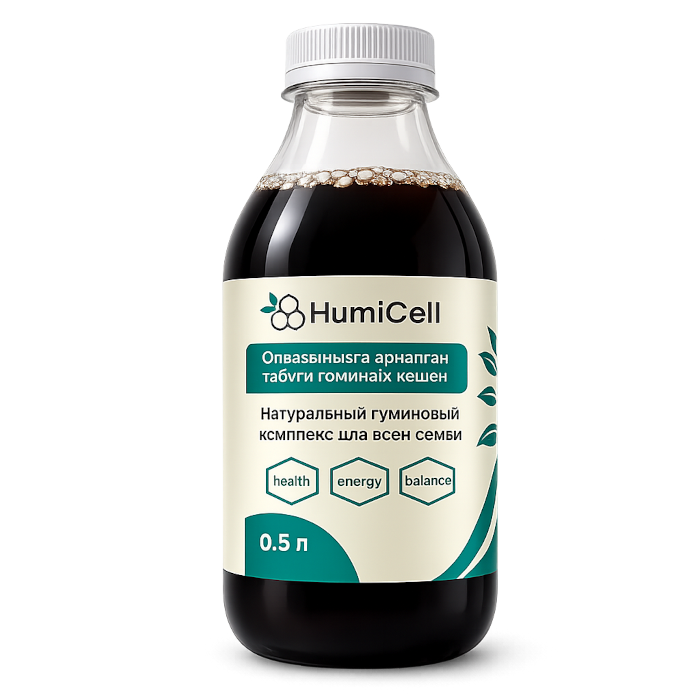
Complete Information on Fulvic Acids
FULVIC ACIDS
(Fulvic Acids): Chemical and Biological Nature
Fulvic acids are a low-molecular-weight fraction of humic substances:
molecular weight is 5–10 times lower than that of humic acids
highly soluble in water
electrically active across a wide pH range
The key distinction is their ability to penetrate biological membranes.
Mechanisms of Action
1. Transmembrane Mineral Transport
Fulvic acids:
form chelated complexes with minerals
keep them in a bioavailable form
transport them across cell membranes
Unlike conventional mineral salts, they:
do not require highly acidic stomach conditions
are less likely to irritate the gastrointestinal tract
Result: increased intracellular levels of Mg, Zn, Fe, and Se.
2. Cellular Energy
Research indicates:
improved mitochondrial function
participation in electron transport
reduction of oxidative damage to mitochondria
Subjectively, this may appear as:
increased energy
reduced fatigue
improved cognitive endurance
3. Antioxidant and Adaptogenic Effects
Fulvic acids:
activate endogenous antioxidant systems (SOD, catalase)
reduce intracellular free radical levels
They provide a systemic effect, unlike humic acids.
4. Immune Regulation
Fulvic acids:
do not directly stimulate immunity
optimize cellular responses
reduce chronic subclinical inflammation
This may be important for patients with:
autoimmune tendencies
metabolic syndrome
chronic stress
Clinical Positioning
Fulvic acids may be appropriate when the goal is:
replenishing minerals
supporting cellular metabolism
improving adaptive capacity
recovery after stress and physical strain
Important Scientific Notes
Not medications
Do not replace medical treatment
Effects are dose-dependent
Should be taken separately from medications (2–3 hours apart)
FULVIC ACIDS
(systemic action, cellular function, metabolism)
Conditions and Disorders Where Their Use May Be Justified
1. Mineral Deficiencies
Magnesium deficiency
Iron deficiency states (outside active anemia)
Zinc and selenium deficiency
Electrolyte imbalance
Rationale: chelated transport of minerals into cells and improved bioavailability.
2. Chronic Fatigue and Asthenic Conditions
Chronic fatigue syndrome
Post-stress exhaustion
Reduced physical and mental endurance
Rationale: support of mitochondrial function and cellular energy production.
3. Neurological and Cognitive Functional Disorders
Brain fog
Reduced concentration
Chronic stress
Emotional exhaustion
Rationale: improved cellular metabolism and antioxidant protection of neurons.
4. Immune and Inflammatory Conditions
Chronic subclinical inflammation
Frequent colds
Recovery after infections
Rationale: immune modulation without overstimulation and reduced oxidative stress.
5. Metabolic Disorders
Insulin resistance (as part of comprehensive support)
Lipid metabolism disorders
Increased oxidative stress
Rationale: involvement in the regulation of cellular metabolism and antioxidant systems.
6. Rehabilitation and Recovery
After surgery
After severe illnesses
After intense physical activity
Rationale: acceleration of cellular recovery and support of mineralization.
"Fulvic acids do not directly treat disease, but they improve the conditions in which cells can function and recover normally."
Important points to emphasize:
Do not replace medications
do not mask symptoms
act through fundamental biological mechanisms
Effects are cumulative